The Shift: From Doing Work to Managing Work
For decades, productivity meant one thing:
doing more work, faster.
But something fundamental has changed.
In 2026, the real challenge is no longer execution.
It’s deciding what deserves your time.
Your day is no longer dominated by one big task.
Instead, it’s filled with:
- Meetings
- Messages
- Deadlines
- Context switching
- Constant re-planning
Work has become a management problem.
And just as we no longer write reports on typewriters,
manual scheduling is quietly becoming obsolete.
Dragging tasks around a calendar by hand will soon feel as outdated as carbon paper.

The Cost of “No AI”: Falling Behind Is the Real Risk
For a long time, AI was framed as a “nice-to-have.”
A productivity boost.
A time saver.
That framing is already outdated.
Today, the real cost of not using AI is competitive disadvantage.
Imagine this:
- You and a competitor have the same skills
- The same market
- The same opportunities
But your competitor uses AI to:
- Save 8–10 hours every week
- Focus on higher-leverage work
- Make faster, clearer decisions
Over a month, they gain an extra workweek.
Over a year, they gain months of progress.
You don’t lose because you work less.
You lose because they move faster.
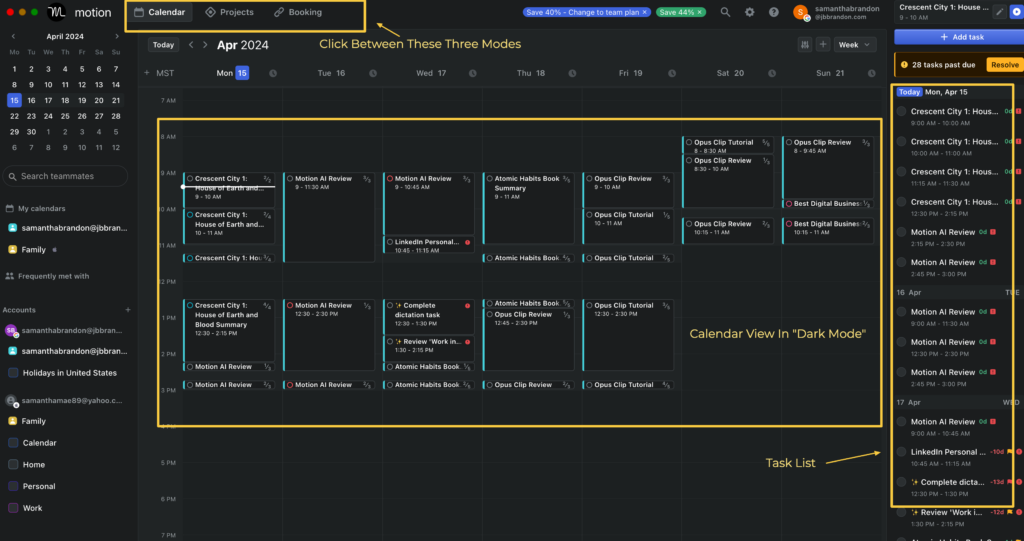
Tools Like Motion: The First True AI Assistants
Most productivity tools simply store information.
Calendars store meetings.
Task managers store to-dos.
Tools like Motion are fundamentally different.
They don’t just store data.
They act on it.
Motion:
- Decides what you should work on next
- Rebuilds your schedule when things change
- Protects focus time automatically
- Adjusts priorities without constant input
This is the first generation of decision-making software.
Not automation.
Not reminders.
Real assistance.
The kind that removes mental load — not just organizes it.
A Bold Prediction: Calendar Management Won’t Be a Human Skill
Here’s a prediction that might sound extreme — but won’t for long:
By the end of 2026, calendar management will no longer be a human skill.
Just as:
- We no longer calculate routes manually
- We no longer memorize phone numbers
- We no longer balance checkbooks by hand
We won’t manually decide:
- What to work on
- What to postpone
- How to reorganize a broken day
AI will handle it faster, better, and without emotional fatigue.
And once people experience that shift,
they rarely go back.
The Future Isn’t Coming — It’s Already Here
This isn’t about hype.
It’s about trajectory.
AI assistants are no longer experimental.
They’re practical, affordable, and improving rapidly.
Early adopters:
- Gain time
- Gain clarity
- Gain leverage
Everyone else will wonder how they ever kept up.
The future of work doesn’t reward effort.
It rewards leverage.
Final Thoughts
You don’t need to wait for the future.
You’re already standing in it.
The only question is this:
Will you continue managing work manually — or let AI handle the complexity for you?
👉 Start your journey with our full Motion Review and see what it feels like to work with an AI assistant, not against your calendar.

Automation Architect | Certified Make.com Expert helping businesses in Dubai & Singapore scale faster. Specializes in Real Estate CRM & No-Code workflows. Let’s turn your manual chaos into a money-making machine.